Ask anyone who grew up in Fruita about Moon Farm and you will get a smile before you get an answer. This odd, charming old farmstead on the edge of town has been part of local childhood for generations. It is part farm, part folk art project, and part time capsule, and it is one of those places that makes Fruita feel like Fruita. Here is what Moon Farm is, what it is not, and how to plan a visit without any surprises.
What exactly is Moon Farm?
Moon Farm is a small historic farm property a few minutes from downtown Fruita, tucked among orchards and pasture at the base of the Colorado National Monument. The farm dates back to Fruita's early agricultural days, when the whole valley ran on peaches, apples, and hay rather than mountain bikes. Over the decades the family that owned it filled the grounds with hand built play structures, themed rooms, and collections of old farm equipment that turned the place into something between a petting zoo and a folk museum.
The result does not look like a polished tourist attraction, and that is exactly the appeal. Buildings lean a little. Paint fades where the sun hits it. Peacocks and chickens wander where they please. Kids who visit remember it the way earlier generations remembered a grandparent's farm, because that is more or less what it is.
Why locals talk about it the way they do
Spend any time in a Fruita coffee line and Moon Farm comes up the way a favorite teacher does. People who are now paying mortgages here had birthday parties there. Parents who moved to the valley for the trails discover it through their kids' classmates and end up more charmed than the children.
That word of mouth is the farm's entire marketing department, and it tells you something about the experience. Places earn that kind of standing by being consistent for decades, not by being impressive for a season. Set your expectations to warm rather than flashy and the farm will overdeliver.
A short history of a Fruita original
The farm took shape in the early twentieth century as one of many family operations watered by the canals that still thread through the Grand Valley. While most of its neighbors stayed strictly agricultural, Moon Farm slowly grew into a community gathering spot. Birthday parties, school field trips, and harvest celebrations became part of its rhythm, and generations of Fruita families measured their childhoods in visits.
That history matters because Fruita has changed fast. The town is now famous for singletrack and craft beer, and subdivisions have replaced plenty of old orchards. Moon Farm survives as a reminder of the farm town underneath the bike town, which is a big part of why locals speak about it with so much affection.
Pumpkin season is the main event
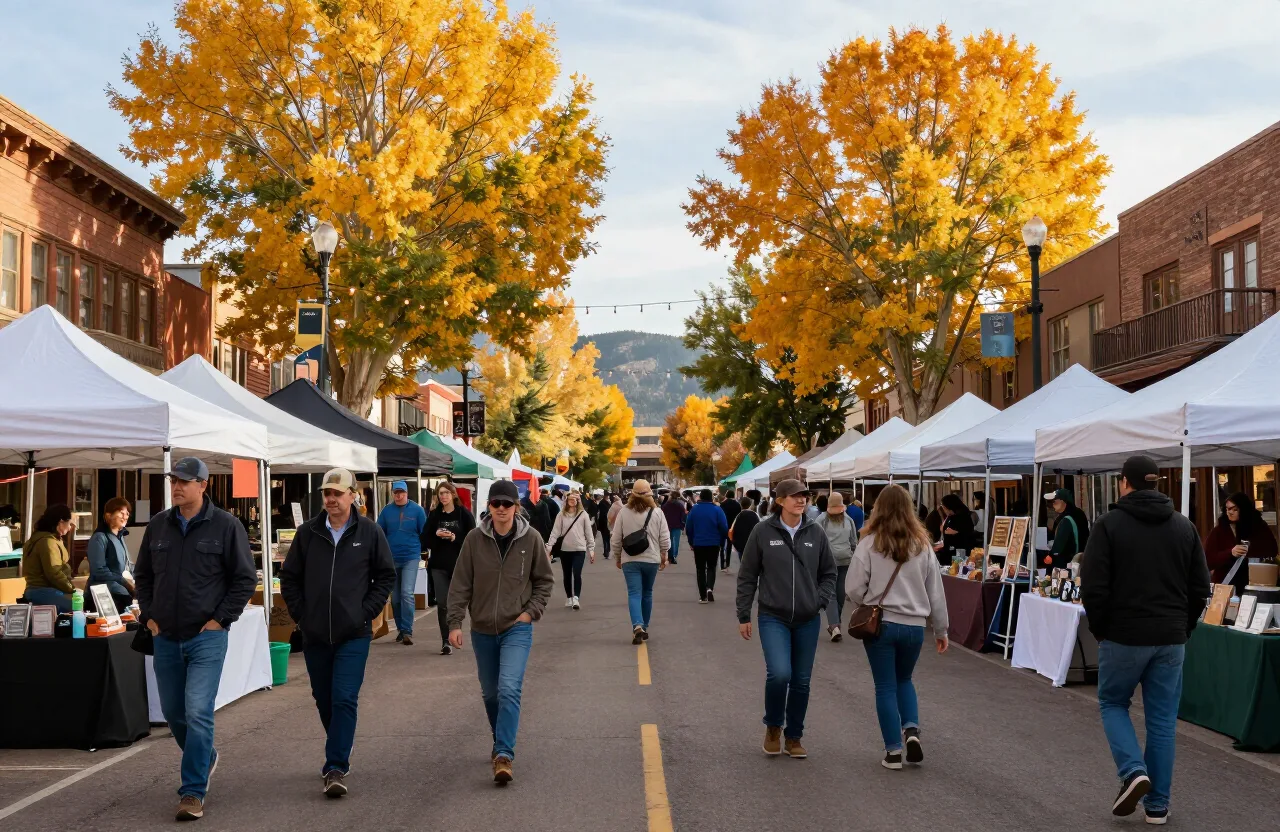
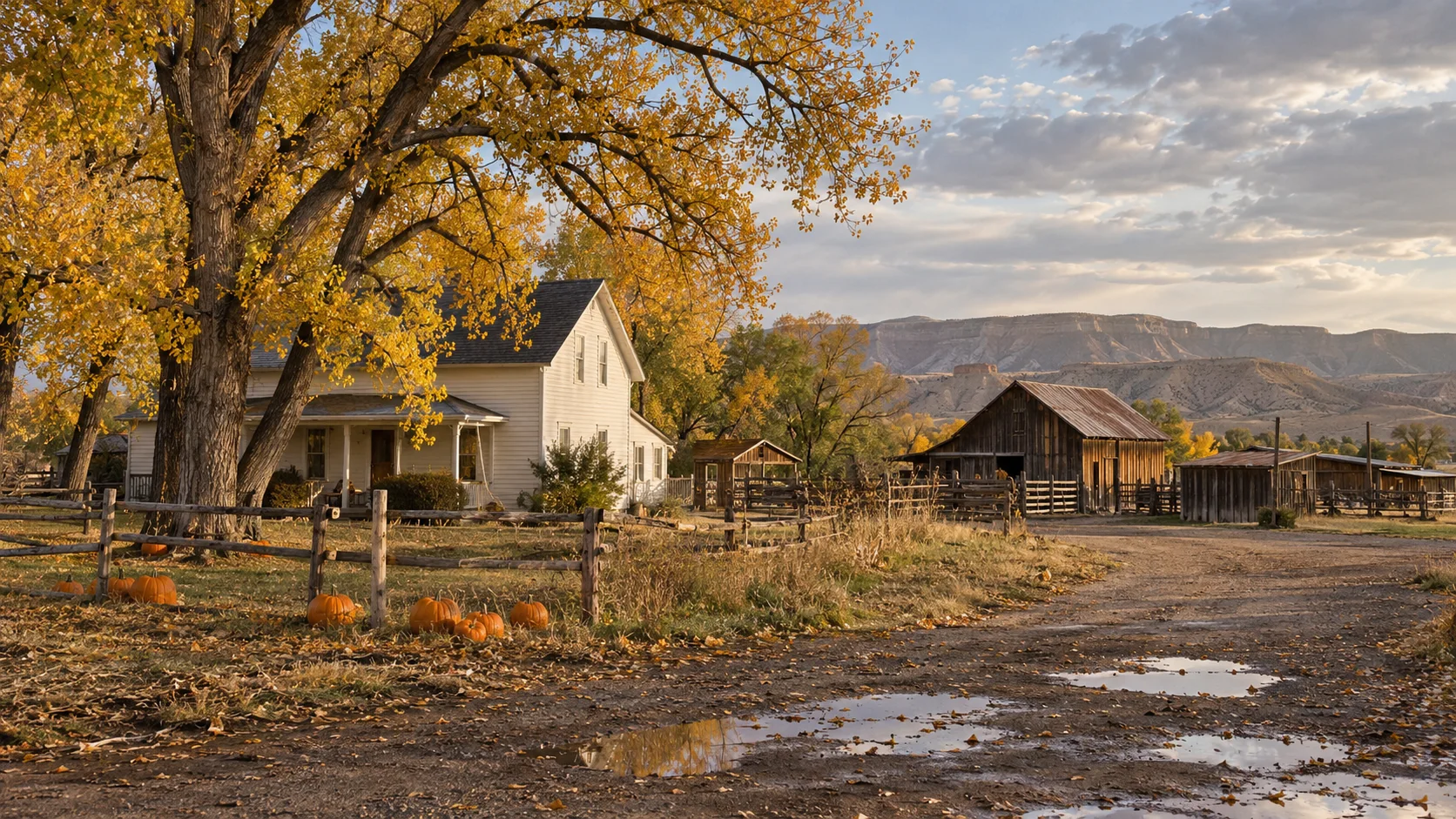
If you only make it to Moon Farm once, come in October. Fall is when the farm feels most alive, with pumpkins scattered across the grass, cottonwoods turning gold overhead, and families wandering the grounds on crisp afternoons. It pairs naturally with the rest of Fruita's autumn calendar, which you can read about in our events and festivals guide.
The drill is simple and old fashioned. Kids pick a pumpkin, poke around the play areas, and visit whatever animals are out. Adults drink something warm and take more photos than they planned to. Nobody is herded through a gift shop. Compared with the big commercial pumpkin patches along the Front Range, the whole experience feels personal and unhurried.
What you will see on the grounds
The farm rewards slow wandering. The main farmhouse anchors a loose cluster of outbuildings, and each one holds something different: old hand tools hung in rows, tack and saddles going soft with age, signs from businesses that left Fruita decades ago. None of it is curated in the museum sense. Things sit where the family put them, which makes poking around feel like discovery rather than programming.
Out in the yard, the inventory changes with the season. Expect some mix of goats, chickens, ducks, rabbits, and the odd peacock announcing itself from a fence line. Kids gravitate to whichever animal will tolerate them longest. Adults tend to drift toward the equipment, the orchard rows, and the view of the Monument's red cliffs standing over the whole scene.
Photographers quietly love the place. Weathered wood, fruit crates, rusted trucks, and fall color make it one of the most photogenic corners of the valley, and the light in the last hour before sunset is worth planning around.
Visiting with kids
Moon Farm is built for children in an unselfconscious way that predates modern attraction design. The play structures are the kind a handy grandfather would build, the animals are close enough to actually meet, and there is room to run. Most kids between two and ten are completely absorbed for a couple of hours.
A few practical notes help. Wear shoes that can handle dirt and the occasional puddle, because this is a working piece of land rather than a paved park. Bring cash for admission and extras, since small rural operations do not always take cards. And check current hours before you drive out, because a family run farm keeps family run hours, especially outside the fall season. The Fruita tourism office is the best source for what is open in any given week.
Timing, weather, and what to bring
Fruita sits at about 4,514 feet in Colorado's high desert, which shapes a visit more than people expect. October afternoons are usually warm enough for shirtsleeves while mornings start near freezing, so layers solve most problems. Our month by month weather guide breaks down the pattern if you are picking dates.
Pack like you would for a casual farm visit anywhere: closed shoes, water, sun protection, and a jacket for the kids once the sun drops behind the Monument. Phone service is fine, but download directions anyway because rural addresses can confuse navigation apps at the edges of town.
If you are stringing together a bigger day, mornings at the farm are quietest and afternoons are liveliest. Weekends in October bring the most activity and the most company. A weekday visit feels like having a family farm to yourselves.
How Moon Farm fits a Fruita itinerary
The farm sits close to the roads that lead toward the Colorado National Monument, so pairing the two makes an easy half day. Drive the Monument's Rim Rock Drive in the morning when the light is best, then let the kids burn off the car ride at the farm afterward. If the crew still has energy, the Dinosaur Journey Museum is ten minutes away and rounds out a full family day.
Cyclists can work it in too. The farm roads west of town are quiet and flat, which makes them a pleasant spin for tired legs on a rest day. More ideas for mixing town time with trail time are in our guide to things to do in Fruita.
Why places like this matter
Every travel town eventually faces a choice between becoming a brand and staying a place. Fruita has done better than most at staying a place, and the proof is in spots like Moon Farm that exist because a local family kept them going, not because a consultant identified a market gap.
Visiting puts a few dollars directly into that kind of stewardship. It also gives kids a memory with some texture to it, the kind that involves real animals and real dirt. In a valley full of world class recreation, an afternoon at a scruffy, beloved old farm might end up being the thing your family talks about longest.
Planning a full Fruita day around the farm
Here is a sample day that works well for families in October. Start with breakfast in town while the morning is still cold, then drive the Monument's Rim Rock Drive between about nine and eleven, when the light is dramatic and the kids are fresh. Picnic at one of the overlooks or come back down to a downtown lunch.
Hit Moon Farm in the early afternoon for pumpkins and animals, allow two hours, and do not rush it. If the crew recovers quickly, the dinosaur museum makes a strong late afternoon stop, and dinner downtown closes the loop. That is a complete, unforced Fruita day with almost no time in the car.
Couples and riders can run the same skeleton with substitutions. Swap the farm's play areas for its photography, ride 18 Road in the morning instead of driving the Monument, and finish with a patio beer while the sun drops. Fruita days are modular like that, which is half the town's charm.
Whatever version you run, the farm slots in best as the relaxed middle of the day rather than a destination you race to. It is a place built for lingering, and it gives back exactly as much time as you give it.
Frequently asked questions
Where is Moon Farm?
Moon Farm sits on the rural west edge of Fruita, Colorado, a few minutes from downtown and close to the roads that lead toward the Colorado National Monument.
When is the best time to visit Moon Farm?
October is the classic time to visit, when the farm's pumpkin season is in full swing and the cottonwoods turn gold. Hours vary seasonally, so check ahead.
Is Moon Farm good for toddlers?
Yes. The farm's simple play areas and approachable animals suit young children especially well. Dress them for dirt and bring layers in fall.
Does Moon Farm take credit cards?
Do not count on it. Small family farms often run on cash, so bring some along and treat card acceptance as a pleasant surprise.
Sources and official links
Fruita tourism (gofruita.com) ↗City of Fruita ↗Colorado National Monument (NPS) ↗Published October 25, 2026 · How we research